

So, you’ve finished the record. The songs are polished, the mixes are locked, and you’re ready to share your heart with the world. But here’s the thing: great music is just the beginning. To build sustainability and momentum in your career, you need a plan that gets your music to the ears that want to hear it. And that takes strategy. So let’s get an overall picture for what the timeline looks like to navigate your roll-out independently, moving from a creative mindset into a strategic one.
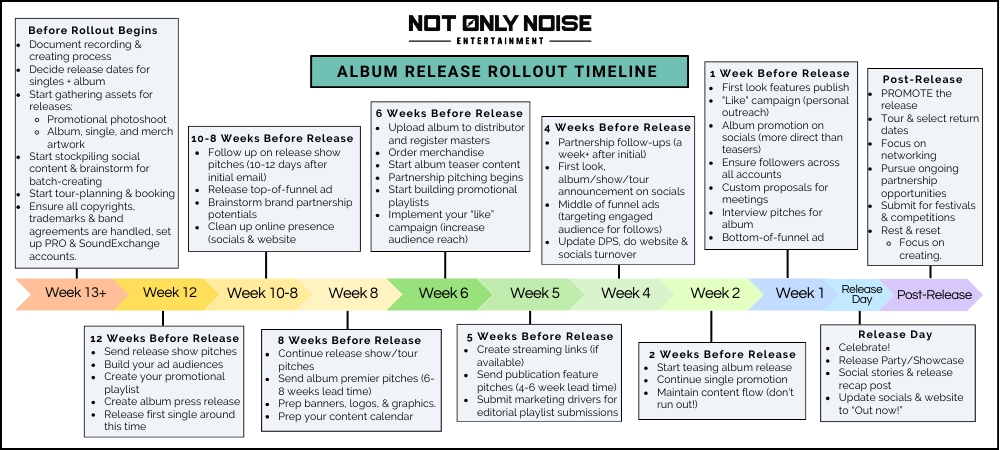
Timeline of The Modern album release roll-out cycle
Creating music is an act of vulnerability, but releasing it is an act of strategy. If you want your art to do more than just exist in a digital vacuum, you have to treat the months leading up to Release Day as the runway for your career. You aren’t just dropping a song, you are building a story that people want to live in.
Creating the Blueprint: 13+ Weeks Out
The most successful releases are built on a foundation that most people never see. You start by looking at the calendar and deciding on hard release dates for your singles and the full album. During this time, you aren’t just dreaming, you’re doing the “invisible work” of building backwards and filling in gaps. Make sure these dates are far enough out that you have enough time to manage everything in the following paragraphs without burning yourself out.
Once you have a handle on dates, you’ll turn your attention to operations. Organize your folders and digital assets to start the cycle with a clean space. Ensure your copyrights, trademarks, and band agreements are solid, and get your PRO and SoundExchange accounts in order so you actually get paid for your work. This is also when you begin brainstorming batch-content ideas, start stockpiling social content, and gathering your visual assets, from promotional photoshoots to merch artwork.
Building Momentum: 12 to 8 Weeks Out
About three months before the album drops, the world gets its first taste. You release your first single around the 12-week mark, which serves as the anchor for building your ad audiences and sending out release show pitches. By 8 weeks out, your focus shifts toward the press. You start pitching for album premieres and preparing your content calendar. This is the phase where you move from “recording artist” to “marketing director,” cleaning up your online presence to ensure your website and socials are ready for the influx of new eyes.
Execution: 6 to 1 Weeks Out
The six-week mark is your technical deadline – now is when you upload the album to your distributor and register your masters. You’ll also want to release your second single right about now. At about five weeks, you’ll submit marketing drivers for editorial playlisting and send feature pitches to publications. As you hit one month out, the announcement goes public. You aren’t just posting a graphic, you’re building your story. Now is when you’ll begin running “middle-of-funnel” ads to target the people who have already engaged with your singles. In the final week, you switch to direct album promotion and personal outreach to ensure your core followers are ready to hit “play” the second it drops.
The Impact: Release Day and Beyond
Release Day is a celebration, so do it with your community! Host a showcase or release party to bring people together in person. Building and staying present in your community is foundational, and a release is the perfect time for them to support you, so don’t skip this part. Turning to your online presence, this is the time for your “Out Now” updates – add this to your website and social bios, and announce it on your social stories and appreciation posts. But the rollout doesn’t end when the clock strikes midnight. Post-release, you are focused on ramping up the promotion, touring, networking, and pursuing ongoing partnership opportunities. You’ll also want to submit for festivals and competitions to keep the project’s heart beating. Once the dust settles, allow yourself the space to rest, reset, and return to your primary purpose: creation.
At this stage, the preparation work has been done, and things can move more on auto-pilot. Resting and resetting is one of the most underrated, yet important phases in the release rollout cycle. Take intentional time to re-center, spend time with friends and family, do things you enjoy, and re-invigorate your creative spark. This period is necessary to keep your momentum sustainable and carry you through your next release cycle – a process that will be continuously repeating throughout your career.
The Visual

 Music City Movement
Leave a comment